 Delivery Available
 24 Hour Online Ordering
 011 392 4809
Italian Coffee and Café Culture | A rhythm you step into.
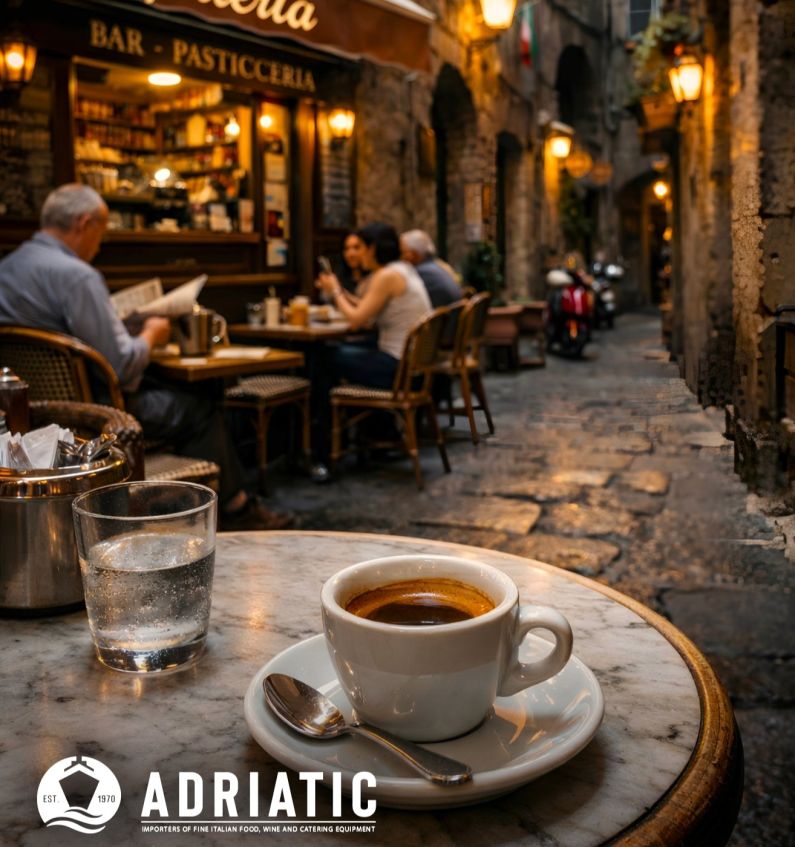
To understand Italian coffee culture, you have to stop treating it as a habit and start seeing it as movement. Italian life flows. Language flows. Meals flow. Conversations overlap and return to themselves. The day is not broken into sharp beginnings and endings, but eased into with intention. Coffee sits inside that flow as something steady and familiar, repeated so often it becomes part of the body’s memory.
In Italy, the day does not begin in isolation. It begins in relation to others. Shutters lift, cafés open, counters are wiped clean, and espresso machines are switched on with the certainty of gestures performed thousands of times before. The café, or bar, becomes one of the first shared spaces people step into. Not to linger, but to orient themselves.
People arrive already knowing what they will order. There is no browsing, no hesitation. Espresso is the default. Cappuccino belongs to the morning. A caffè macchiato is acceptable if asked for simply. This lack of choice is not limiting. It is calming. It removes friction and allows the day to begin with clarity.
Most Italians drink their morning coffee standing at the bar. This is not about speed. It is about flow. Standing keeps the ritual light. You stop, you acknowledge the moment, you continue. The exchange with the barista is brief but personal. A greeting, a familiar glance, perhaps a comment about the weather or last night’s football. Then the cup is empty, placed back on the counter, and the rhythm carries you onward.
What outsiders often mistake for rushing is actually fluency. Italians are not hurrying through coffee. They are fluent in it. Repetition has removed uncertainty, and with it the sense of urgency. The ritual is short, but it is complete.
As you move through Italy, the structure of this ritual remains constant, but its tone shifts subtly. In the north, cafés tend to feel sharper and more contained. The bars are polished, the exchanges precise, the espresso taken as punctuation in a structured morning. Coffee here supports a day that moves decisively forward. The romance exists, but it is discreet, expressed through restraint and elegance.
Further south, the rhythm softens without losing its structure. Coffee carries more weight here. The espresso is darker and fuller, meant to be felt as much as tasted, and it rarely arrives alone. On the counter beside the cup, something sweet is often placed without ceremony. A sfogliatella, still warm, its delicate layers breaking as it is lifted. A baba, soaked and yielding, rich without apology. Or a simple rolled wafer, light and crisp, offered as naturally as the coffee itself.
These are not indulgences reserved for special moments. They belong to the morning because daily life has always made room for pleasure. The sweetness does not distract from the espresso. It completes it. Bitter and soft, strong and gentle, held together in balance.
This is one of the quiet truths of Italian culture. Joy is not postponed until the work is done. It is woven into the day so that the work remains humane.
In February, this sensibility becomes more visible. Winter still lingers in the air, even as light returns slowly to the afternoons. Valentine’s Day passes without spectacle. In Italy, love is rarely performed loudly. It shows itself in repetition. Two coffees shared at the same bar. A wafer placed beside an espresso without asking. Time given without distraction. Romance lives in continuity, not in grand gestures.
This understanding carries seamlessly into the home. Italian coffee culture does not live only in cafés. It is deeply rooted in kitchens. The moka pot sits on the stove as a working tool, not an aesthetic object. It is used daily. Its sound is immediately recognisable. Children grow up associating it with morning, with warmth, with someone taking the time to prepare something properly.
Making coffee at home slows the ritual just enough to be felt. The pot is filled, placed on the heat, and left to rise at its own pace. You wait. You listen. You pour. This pause is not inefficient. It is grounding. This is where coffee becomes generational, passed down through repetition rather than instruction.
Italian kitchens reflect the same philosophy found in cafés. Tools are chosen carefully and kept for life. A moka pot darkened with age. A tamper worn smooth by years of use. Espresso cups that do not match but belong together. Wafers and biscuits kept in tins because they are meant to be there, ready to be shared without ceremony. This is the logic of the nonna pantry. Nothing exists for display alone. Everything exists to be used, to be offered, to be relied upon.
The café mirrors this sense of continuity on a communal scale. One of the most quietly powerful aspects of Italian café culture is its equality. At the bar, everyone stands. The banker, the builder, the student, the grandmother. Titles dissolve at the counter. Everyone receives the same cup, the same brief exchange, the same acknowledgment. This daily sameness matters deeply. It reinforces belonging without needing to say so.
Presence is noticed. Absence is noticed too. Relationships are maintained not through appointments, but through shared habit. Even when conversation is minimal, recognition does the work.
Italian coffee culture resists personalisation for this reason. Identity is not expressed through orders. It is formed through relationships, memory, and shared routines. Espresso is espresso. Cappuccino belongs to the morning. These are not rigid rules, but cultural agreements that protect a shared language and allow everyone to move together without friction.
The romance of Italian coffee culture lives here. Not in excess, but in attentiveness. In the tenderness of ordinary gestures repeated daily with care. In the belief that life should begin gently, even on working days.
Living close to this culture teaches you to experience mornings differently. The day is not something to conquer. It is something you enter. Coffee becomes the threshold, the moment where the day is acknowledged before it begins to ask anything of you.
You do not need to be in Italy to live this way. You need intention and respect for rhythm. A moka pot on the stove. Good coffee chosen with care. Simple tools that last. Wafers within reach. Espresso taken without distraction.
Stand if you can. Sit if you must. But allow the moment to exist fully.
This is the culture Adriatic is rooted in. Not a trend or an aesthetic, but a way of living that values continuity, pleasure, and human connection. Coffee as ritual. Café life as quiet structure. A daily romance practised gently, one cup at a time.